Coloring is one of the first "real" activities most children fall in love with. It needs no instructions, it's finished in a few minutes, and there's something to show at the end. That makes it easy to dismiss as a way to keep little hands busy — but for children between three and eight, coloring does a surprising amount of quiet work.
Here are seven real benefits, followed by practical tips to get the most out of coloring time.
1. It strengthens the small muscles of the hand
Holding a crayon, pressing hard enough to leave color, and steering it into a shape all use the small muscles of the fingers and wrist. These are the same muscles children will later need for writing, buttoning a coat and using scissors. Young children usually start with a fist grip and gradually move towards a more controlled "tripod" grip. Regular coloring gives them hundreds of low-pressure repetitions along the way.
On a tablet or phone, tapping a shape to fill it builds a different but related skill: aiming a finger precisely at a target. It's a gentle first step for toddlers who aren't ready to control a crayon yet.
2. It builds hand–eye coordination
Every time a child looks at the edge of a shape and adjusts their movement to stay inside it, their eyes and hands are learning to work together. Coordination improves with practice, and coloring offers that practice in a form children actually want to repeat.
3. It teaches colors — and the words for them
Coloring is a natural moment for color vocabulary. "Which color is the sky today? Blue or purple?" Naming colors while choosing them helps toddlers connect the word to what they see. Older children start noticing lighter and darker shades and experimenting with combinations.
If your family speaks more than one language, coloring is a relaxed way to practice color words in both. Doodlebari lets you switch the whole app between English, Bangla, Hindi, Spanish, French and Arabic.
4. It stretches attention span
Finishing a picture — even a simple one — means staying with one task for a few minutes. For a three-year-old that's a real achievement. As children grow, they choose more detailed pictures and naturally stay focused longer. You don't have to push it: the picture itself provides the goal.
5. It encourages decisions and self-expression
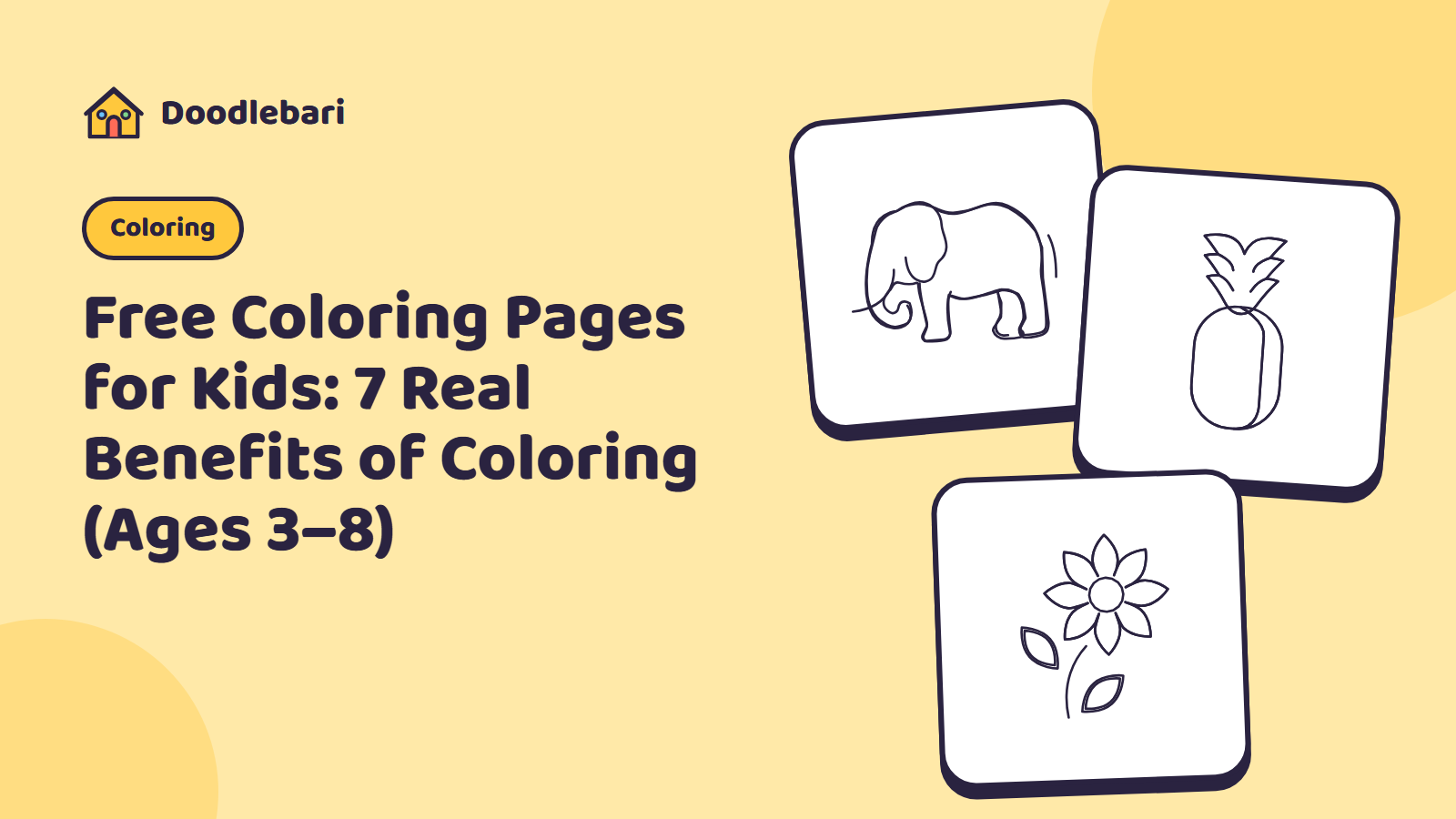
There is no wrong color for an elephant. Choosing a purple elephant or a rainbow car is a small, safe decision that belongs entirely to your child. Those choices build confidence, and they often lead to stories: "The elephant is purple because it's his birthday."
6. It can calm a busy mind
Many parents notice that coloring settles children after an exciting day. The repetitive, predictable motion and the clear, achievable goal make it a good wind-down activity before a meal or bedtime.
7. It gives a sense of accomplishment
"Look what I made!" is a powerful feeling. A finished page is visible proof of effort, and saving or displaying it tells your child that their work matters. In Doodlebari, children can save finished pictures to My Art so they can come back and admire them.
How to make coloring time count
- Match the picture to the age. Toddlers do best with a few big shapes. Children of five and up enjoy more detail.
- Talk while they color. Ask about the colors they choose and the story behind the picture, instead of correcting "wrong" colors.
- Let them finish — or not. Some children color every corner; others move on after three shapes. Both are fine.
- Mix paper and screens. Crayons build grip strength; tap-to-fill coloring is great for younger toddlers and for travel. Each has its place.
- Keep sessions short. Ten to twenty minutes of focused, happy coloring beats an hour of boredom.
Try free coloring pages online
Doodlebari's free coloring pages for kids include animals, vehicles, fruits, nature scenes and shapes. Children pick a color, tap a shape and watch it fill — no printing, no mess and no sign-up. Pictures are saved only in your browser, never uploaded.
Frequently asked questions
At what age can children start coloring?
Many toddlers start scribbling with chunky crayons around 15–18 months. Coloring inside shapes usually becomes interesting between ages two and three. Tap-to-fill coloring on a screen can suit children from about age three, with a grown-up nearby.
Is coloring on a tablet as good as coloring on paper?
They build slightly different skills. Paper and crayons develop grip strength and pressure control; tap-to-fill coloring develops precise pointing, color choice and focus. A mix of both works well.
Should I correct my child for coloring outside the lines?
It's better not to. Staying inside the lines improves naturally with age and practice. Praise effort and choices instead of neatness.