Many children can "count to ten" long before they understand what ten means. That's because learning numbers is really three separate skills:
- Counting — saying numbers in order and matching one number to each object.
- Recognizing numerals — knowing that the symbol "7" means seven.
- Writing numerals — forming each digit correctly.
Number tracing helps most with the third skill, but it supports the other two as well. Here's how to bring them together.
Counting: one number for each thing
Young children often say numbers faster than they point, skipping or double-counting objects. Help them slow down:
- Touch and count each toy as you say the number.
- Line objects up in a row before counting.
- Ask "how many?" after counting — the last number said is the total.
- Count everything: stairs, grapes, cars on the street, claps.
Recognizing numbers
- Spot numbers on doors, buses, clocks and price tags.
- Play dot-to-dot, which is number recognition in disguise. Try our dot-to-dot puzzles.
- Match numerals to quantities: put the card "4" next to four blocks.
Writing numbers with tracing
Numbers have stroke orders just like letters, and learning the right starting point from the beginning prevents habits that are hard to change later.
- Start at the top. Almost every digit begins at the top.
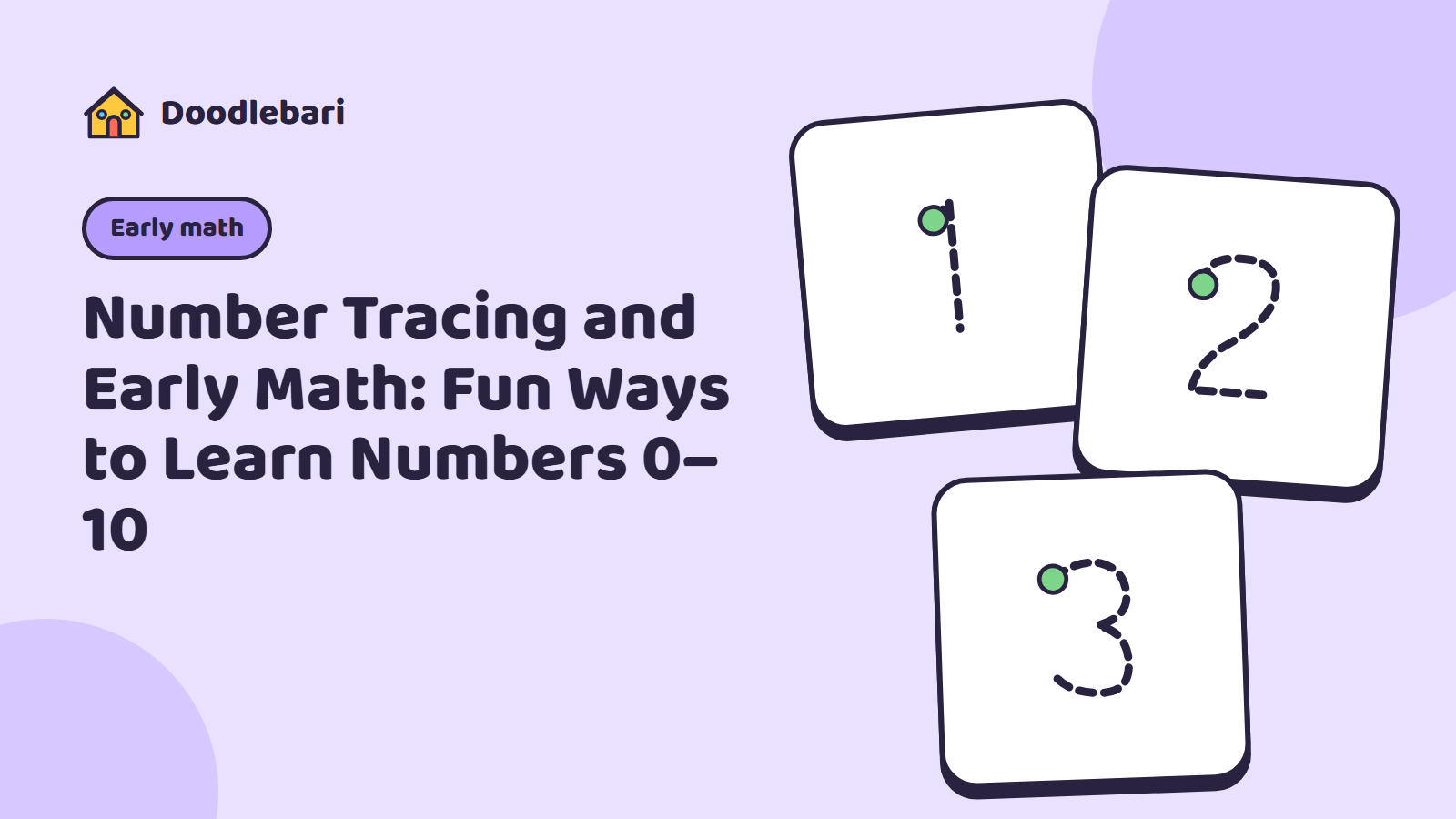
- Follow the arrows or numbered strokes. In Doodlebari's number tracing, each digit shows a green starting dot and numbered strokes to follow in order.
- Say it as you trace. "Seven: across, then down the slide."
- Trace, then copy, then write. Move on only when tracing feels easy.
Simple rhymes for writing digits
- 1: "Straight line down, and now you've won — that's the way to make a one."
- 2: "Around and back on the railroad track — two, two, two."
- 7: "Across the sky and down from heaven — that's the way to make a seven."
- 8: "Make an S, but don't wait — go back up to make an eight."
Rhymes like these are popular with teachers because the rhythm helps children remember the movement.
"My child writes numbers backwards!"
Writing 2, 3, 5, 7 or 9 backwards is extremely common in young children and usually fades on its own as they get more practice. Gentle correction, tracing with a clear starting point and lots of exposure to printed numbers help. If reversals continue well into school age alongside other difficulties, mention it to your child's teacher.
Everyday math moments
- Cooking: count spoons of flour, and compare "more" and "less."
- Shopping: find the number 5 on a price tag; count apples into the bag.
- Tidying up: "Can you put away six blocks?"
- Building: which tower is taller? How many blocks does each have?
- Patterns: red, blue, red, blue… what comes next?
Keep it playful
Math anxiety can start early, so keep numbers light and fun. Celebrate trying, not just getting it right, and let your child be the teacher sometimes — children love correcting a grown-up who "accidentally" counts wrong.
Frequently asked questions
When should kids learn to write numbers?
Many children start forming numbers around ages four to five, once they can draw lines and circles comfortably. Recognizing numbers usually comes a little earlier.
Is it normal for kids to write numbers backwards?
Yes. Reversals are very common until around age seven and typically improve with practice.
What's the best way to practice number tracing?
Short, regular sessions with a clear starting point and correct stroke order. Combine tracing with counting real objects so numbers have meaning.